




































































































































































9 Benefits Of Regular Exercise And Fitness
Author: RVLNSV PRASAD
Updated On: August 2026

Introduction
The Benefits Of Regular Exercise are powerful and can make a meaningful difference in everyday life. Exercise is not only for athletes. It is for anyone who wants to support better health.
Many people believe fitness is complicated. They think they need a gym, special equipment, or hours of exercise every day. That idea is not necessary. Good health can often be supported through simple movement, small routines, and consistent habits.
I learned this from personal experience. A few years ago, I spent most of my time sitting and worked long hours on a laptop. I rarely moved, and over time my energy declined. My body felt stiff, and my sleep was poor.
One day, I decided to make a simple change. I started walking, then added short workouts and stretching. Within a few months, I felt different. My energy returned, and I noticed improvements in my focus and mood. This was my personal experience, not scientific evidence, and individual results can vary.
That experience helped me understand the value of regular physical activity. The Healthline guide on the benefits of exercise also discusses several ways exercise can support physical and mental well-being.
In this article, we will explore nine important exercise benefits supported by scientific evidence and practical experience. The guide uses simple language, clear ideas, and real examples to explain why regular movement matters. Let us begin.
Quick Answer
Regular exercise can support heart health, mental well-being, weight management, energy, muscle and bone strength, sleep, brain function, healthy aging, and confidence. You do not need extreme workouts; starting with manageable activities and building consistency over time can be an effective approach. Mayo Clinic notes that even smaller amounts of physical activity can provide health benefits.
Author Note
This article was written by RVLNSV PRASAD to provide simple, practical information about the potential benefits of regular physical activity. The article combines general health information with personal experiences, which are included for context and should not be considered scientific evidence or guarantees of individual results.
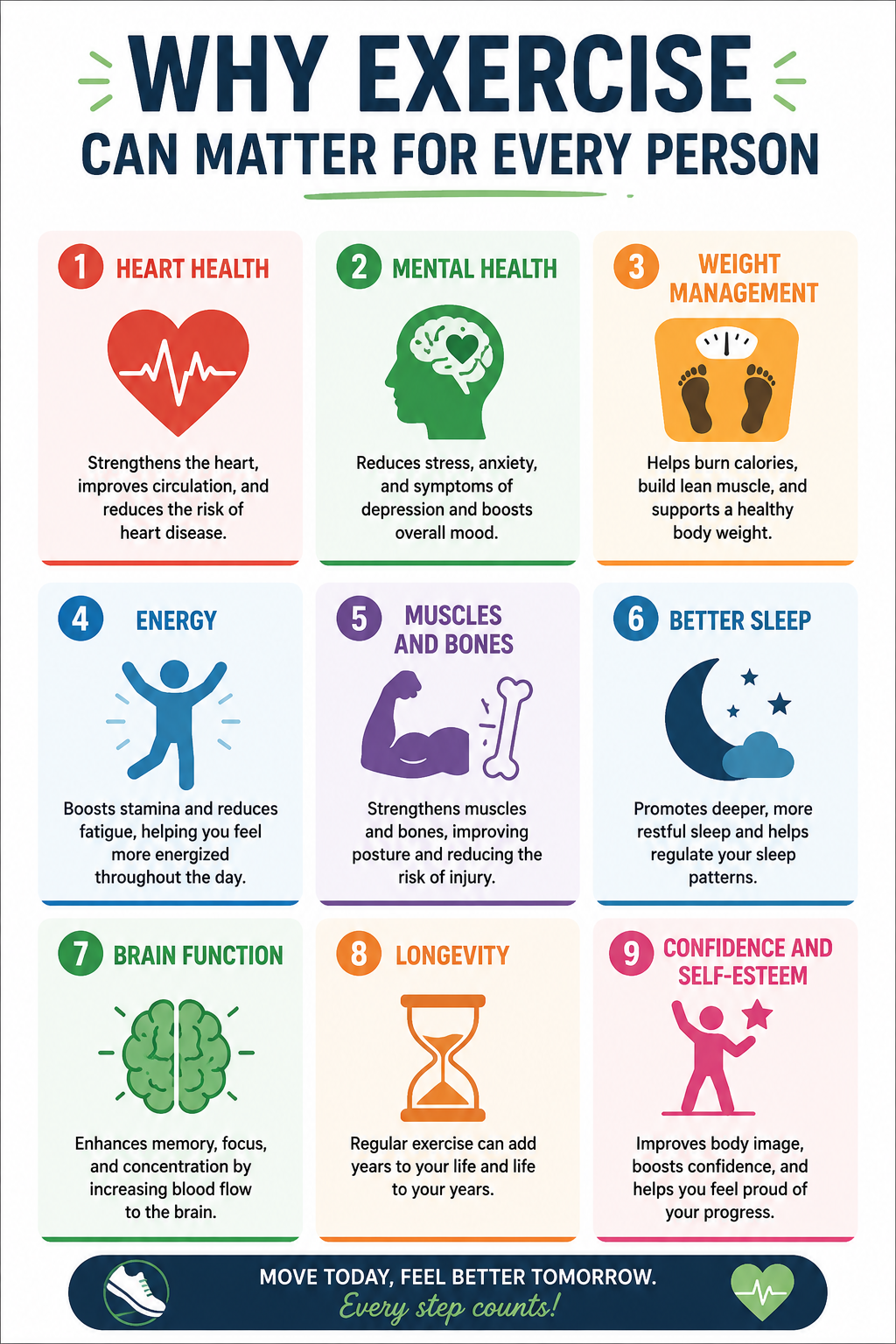
Why Exercise Can Matter for Every Person
Before discussing the benefits of regular exercise, it is important to understand why movement matters. The human body needs regular physical activity to support strength, mobility, cardiovascular health, and overall well-being.
People were historically more physically active through walking, outdoor work, and other daily activities. Modern life is different, with many people spending long periods sitting at work, in cars, or in front of screens. The CDC notes that regular physical activity can support heart health, bone strength, sleep, mental well-being, and healthy weight management.
Regular movement can help:
- Support physical health
- Improve mental well-being
- Maintain muscle and bone strength
- Support healthy weight management
- Improve sleep and daily function
You do not need extreme workouts to become more active. Harvard Health also emphasizes that different forms of exercise, including aerobic, strengthening, stretching, and balance activities, can contribute to overall fitness.
Now let us explore the most important exercise benefits for overall health in more detail.
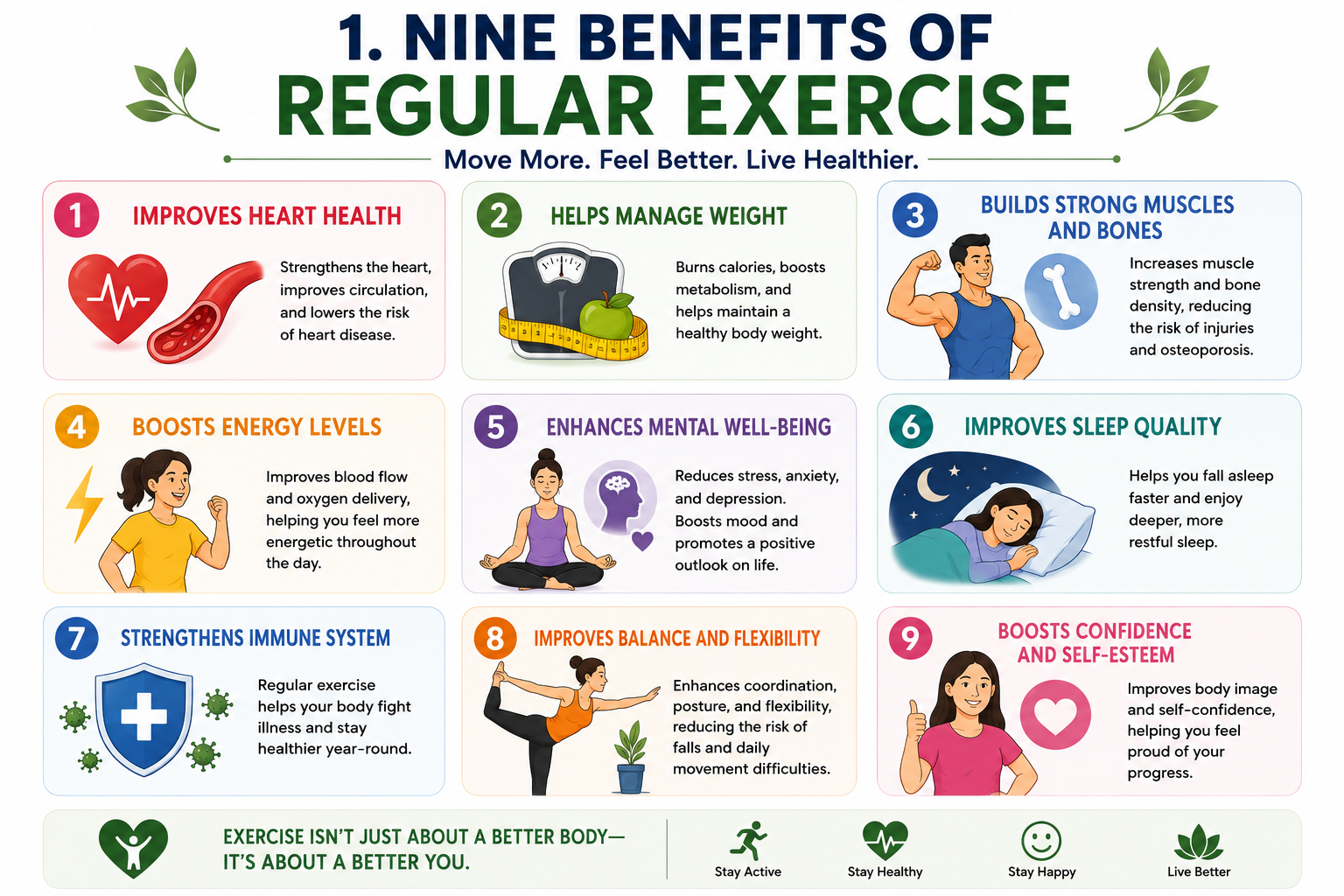
Benefits of Regular Exercise at a Glance
| Area of Health | How Regular Activity Can Help |
|---|---|
| Heart health | Supports cardiovascular fitness and heart function |
| Mental well-being | Can support mood and help manage stress |
| Weight management | Increases energy expenditure and supports healthy weight |
| Energy | Improves fitness and endurance |
| Muscles and bones | Helps maintain strength and physical function |
| Sleep | Can support sleep quality |
| Brain function | Supports thinking, memory, and cognitive health |
| Healthy aging | Helps maintain mobility and independence |
| Confidence | Can support self-esteem and confidence |
This table is well supported by Mayo Clinic’s overview of exercise benefits, which includes weight control, cardiovascular health, mood, energy, sleep, cognitive function, and confidence.
1. Benefits of Regular Exercise for Heart Health
Exercise Strengthens the Heart
One of the major benefits of regular exercise is supporting cardiovascular health. The heart is a muscle, and regular physical activity helps improve cardiorespiratory fitness and circulation. The CDC reports that regular physical activity can lower the risk of heart disease and stroke.
Real-Life Example
My uncle had high blood pressure, and his doctor recommended a simple daily walking routine. He did not enjoy going to the gym, so he started walking for about 30 minutes each day. After following the routine for six months, he reported improvements in his blood pressure, weight, and energy.
His experience is a personal example rather than scientific evidence, and medication should only be changed under the direction of a healthcare professional.
Expert Insight
Activities such as walking, cycling, and swimming can contribute to cardiovascular fitness. The American Heart Association recommends regular aerobic activity and notes that even shorter periods of movement can be a useful starting point.
Regular physical activity can help:
- Support heart health
- Improve cardiovascular fitness
- Help manage blood pressure
- Reduce the risk of heart disease and stroke
- Make everyday activities easier
2. Exercise and Mental Health
Exercise Can Improve Mood
Regular physical activity can support mental well-being and may help improve mood, reduce stress, and ease feelings of anxiety. Physical activity also affects several processes in the brain and body, which may contribute to these benefits. The CDC explains how physical activity can support brain health and reduce symptoms of anxiety and depression.
Regular movement may help with:
- Improving mood
- Reducing stress
- Easing feelings of anxiety
- Supporting mental clarity
- Promoting overall emotional well-being
Personal Experience
During a stressful period at work, I struggled with focus and often felt tired and overwhelmed. I started taking 20-minute morning walks, and after some time I noticed that my mood felt better, my mind seemed calmer, and my productivity improved. This was my personal experience, not scientific evidence, and individual responses to physical activity can vary.
Science Behind It
Exercise can influence brain chemicals and other biological processes involved in mood and stress regulation. Rather than describing exercise as a replacement for treatment, it is more accurate to view physical activity as one potential part of a broader approach to mental well-being. The Johns Hopkins Medicine guide to exercise and mental health also discusses the relationship between physical activity, stress, mood, and well-being.
3. Exercise for Healthy Weight Management
Exercise Helps Manage Body Weight
One important benefit of regular physical activity is its role in weight management. Exercise increases energy expenditure and can help support a healthy body weight when combined with balanced nutrition and other healthy habits. The CDC explains how physical activity can support healthy weight management.
Regular movement can help by:
- Increasing daily energy expenditure
- Supporting muscle strength and physical fitness
- Helping maintain a healthy body weight
- Complementing a balanced eating pattern
- Supporting long-term weight management
A Real-Life Story
A colleague of mine struggled with weight gain and tried strict diets and skipping meals, but these approaches did not work well for him long term. He eventually changed his strategy by adding more regular movement to his routine, including daily walking, weekend cycling, and simple bodyweight workouts.
Within a year, he lost 12 kilograms and reported that he was able to maintain his weight more comfortably. He described the change simply: “I stopped fighting food. I started moving more.” This is a personal experience rather than scientific evidence, and individual results can vary.
The National Center for Biotechnology Information provides research on physical activity and its relationship with body weight and energy balance.
4. Exercise and Daily Energy Levels
Exercise Can Boost Daily Energy
Many people think exercise always makes them tired, but regular physical activity can actually help support energy levels. Movement can improve cardiovascular fitness, circulation, and sleep quality, which may make everyday activities feel easier.
Regular movement can help:
- Support physical fitness
- Improve endurance
- Promote better sleep
- Reduce feelings of sluggishness
- Make daily activities easier
Personal Observation
When I skip workouts for several days, I often feel less energetic. When I return to regular movement, I feel more alert and active. This personal observation encouraged me to make exercise a regular part of my routine, although individual experiences can vary.
The key is to find an activity that suits your fitness level and lifestyle rather than relying on intense workouts.
5. Exercise for Strong Muscles and Bones
Exercise Supports Muscles and Bones
Muscles and bones can naturally become weaker with age, but regular physical activity can help maintain strength and physical function. Strength training can support muscle strength, while weight-bearing activities can help maintain bone health. The National Institute of Arthritis and Musculoskeletal and Skin Diseases explains that weight-bearing and resistance exercises can help support healthy bones.
Activities that can help include:
- Resistance-band exercises
- Chair squats
- Walking
- Strength training
- Other weight-bearing activities
Concrete Example
My grandmother started simple strength exercises at age 65. She used light resistance bands, practiced chair squats, and took short walks. After two years, she felt stronger and had better balance. Her experience is a personal example rather than scientific evidence, and individual results can vary.
The CDC also recommends muscle-strengthening activities as part of regular physical activity for adults. This supports the broader role of exercise in maintaining strength and physical function across different stages of life.
6. Exercise for Better Sleep
Exercise Can Support Sleep Quality
Sleep problems are common, and factors such as stress and excessive screen time can affect sleep patterns. Regular physical activity may support better sleep by helping reduce stress and promoting a healthier sleep-wake routine. The CDC notes that physical activity can improve sleep quality.
Regular movement may help:
- Support better sleep quality
- Reduce stress
- Promote a more consistent sleep routine
- Support daytime energy and alertness
Real-Life Example
A friend of mine struggled with poor sleep and tried several approaches without much success. He then started jogging three evenings a week. After about three weeks, he reported falling asleep more easily and waking up feeling more refreshed. This is a personal experience, not scientific evidence, and individual responses to exercise can vary.
The National Heart, Lung, and Blood Institute also emphasizes the importance of healthy sleep habits for overall health and well-being.
7. Exercise and Brain Function
Exercise Can Support Focus and Memory
Another important benefit of regular physical activity is its potential to support brain function. Exercise can increase blood flow and support processes involved in thinking, memory, and concentration. The CDC explains that physical activity can support brain health, including memory and thinking abilities.
Regular movement may help support:
- Concentration
- Memory
- Thinking skills
- Mental alertness
- Overall brain health
Example From Daily Life
During exam season, one student I know created a simple routine: study for one hour, walk for ten minutes, and then repeat. He felt that the short movement breaks helped refresh his mind and maintain his focus. This is a personal observation rather than scientific evidence, and individual experiences can differ.
The National Institute on Aging also highlights physical activity as an important part of healthy aging and overall well-being.
8. Exercise and Longevity
Regular Activity Can Support Healthy Aging
Regular physical activity is associated with several health benefits as people age. Staying active can help maintain physical function, support cardiovascular health, and reduce the risk of some chronic diseases. The World Health Organization explains the health benefits of physical activity, including its role in reducing the risk of cardiovascular disease, diabetes, and some cancers.
Staying active can help:
- Support healthy aging
- Maintain physical function
- Support cardiovascular health
- Reduce the risk of some chronic diseases
- Improve overall quality of life
Why Consistency Matters
The goal does not have to be intense exercise. Regular activity that matches your abilities can help you remain physically active over time. The CDC recommends physical activity for older adults, including aerobic activity, muscle-strengthening exercises, and activities that support balance.
Building a sustainable routine can make it easier to remain active throughout different stages of life.
9. Exercise, Confidence, and Self-Esteem
Exercise Can Support a Positive Self-Image
Another potential benefit of regular physical activity is greater confidence and self-esteem. Improving strength, physical ability, and body awareness can help people feel more capable in everyday life. Exercise can also contribute to mental resilience and a more positive relationship with physical activity.
Regular movement may help support:
- Greater confidence in physical abilities
- Improved strength and mobility
- Better body awareness
- A stronger sense of accomplishment
- Positive mental well-being
Personal Insight
The biggest change exercise gave me was not physical; it was mental. As I became more active, I felt more confident, trusted my body more, and felt capable of handling everyday activities. This was my personal experience, not scientific evidence, and individual responses to physical activity can vary.
These emotional and psychological aspects of fitness are sometimes overlooked, but they can be an important part of maintaining an active and healthy lifestyle.
A healthier approach can focus on:
- Energy and daily function
- Mobility and physical ability
- Mental well-being
- Strength and endurance
- Long-term health
The benefits of physical activity go beyond how your body looks. Exercise should support your daily life rather than become an overwhelming obligation. Simple, enjoyable routines can be easier to maintain consistently and can contribute to better health over time.
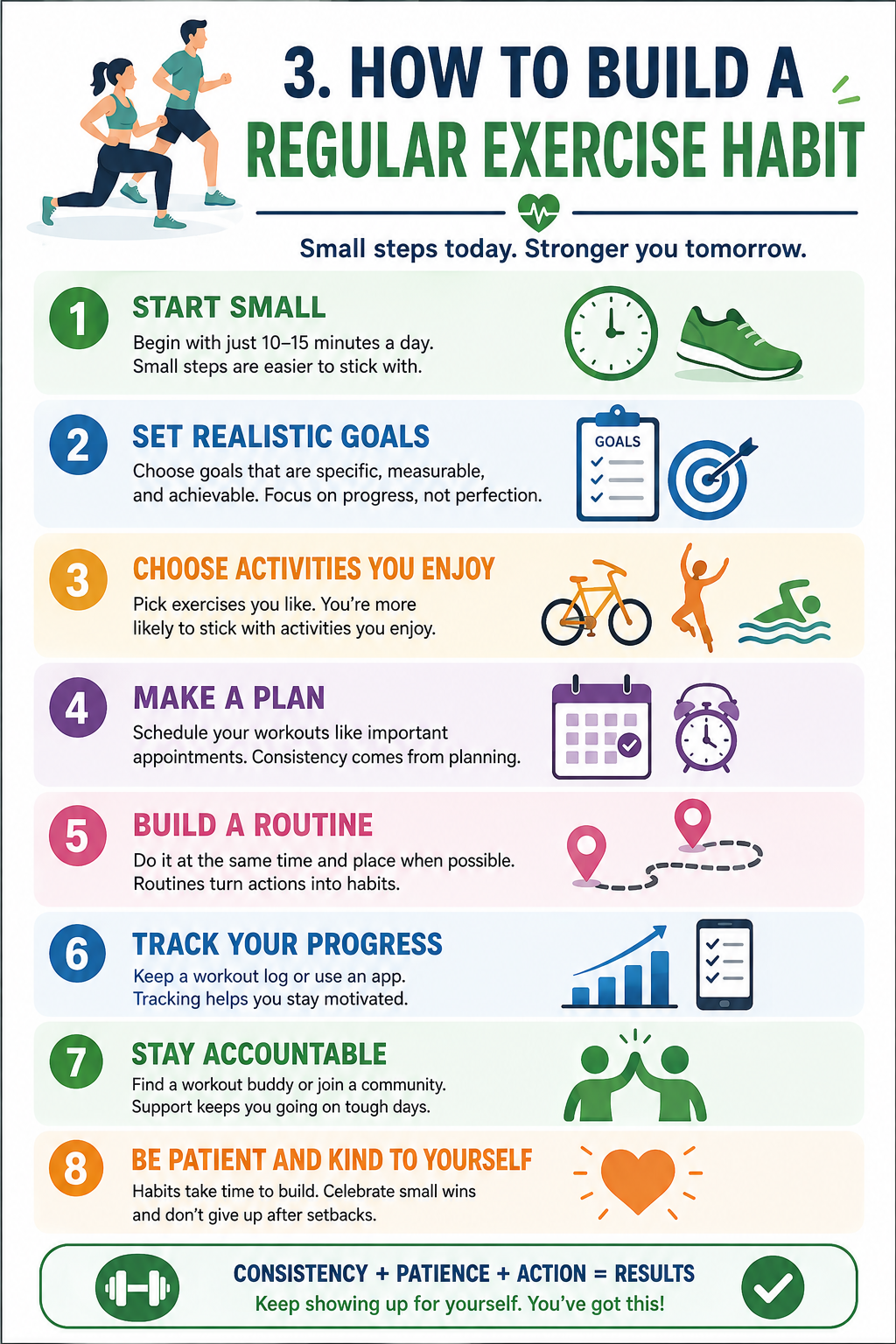
How to Start a Regular Exercise Habit
Starting is often the hardest step, but a simple routine can make regular physical activity easier to maintain. Focus on gradual progress rather than trying to do too much at once.
Start Small
Begin with about 10 minutes of activity each day. As your fitness improves, you can gradually increase the duration or intensity. Consistency is often more sustainable than pushing yourself too hard at the beginning.
Choose Enjoyable Activities
Choose activities you are likely to continue. If you dislike running, try walking. If you enjoy dancing, cycling, or swimming, include those activities in your routine.
Set a Routine
Try exercising at the same time each day or on specific days of the week. Repeating an activity regularly can help make it part of your normal routine.
Track Progress
Recording your activity can help you notice small improvements and maintain motivation. Progress can include walking for longer, feeling stronger, or completing activities more comfortably.
Be Patient
Health and fitness changes can take time. The benefits of physical activity can build gradually as you maintain a consistent routine. The CDC recommends regular physical activity and notes that some activity is better than none.
Frequently Asked Questions
1. What Are the Benefits Of Regular Exercise for Beginners?
For beginners, regular physical activity can support better sleep, improved energy, stronger muscles, cardiovascular fitness, and a more positive mood.
2. How Quickly Can People Notice Changes From Exercise?
The timeline varies from person to person. Some people may notice changes in mood, energy, or sleep relatively early, while improvements in strength and endurance generally take longer.
3. How Many Days Per Week Should Adults Exercise?
Adults should aim for regular activity throughout the week. Current guidelines recommend at least 150 minutes of moderate-intensity aerobic activity each week, along with muscle-strengthening activities on at least two days.
4. Are Exercise Benefits Different for Older Adults?
Older adults can benefit from activities that support strength, balance, flexibility, cardiovascular fitness, and physical function. Activities should be adapted to individual abilities and health needs.
5. Can Walking Improve Overall Health?
Yes. Walking is an accessible form of physical activity that can support cardiovascular fitness, endurance, mobility, and overall well-being.
6. Can Exercise Support Mental Health?
Yes. Regular physical activity can support mental well-being and may help reduce feelings of anxiety and depression. It can also contribute to better sleep and mood.
7. Can Short Workouts Still Be Useful?
Yes. Short periods of activity can contribute to your overall physical activity level. If you are currently inactive, starting with manageable sessions and gradually increasing your activity can be a practical approach. The Mayo Clinic explains the wide range of health benefits associated with regular physical activity.
Key Takeaways
- Regular physical activity can support heart and cardiovascular health.
- Exercise can contribute to better mood and mental well-being.
- Movement can support healthy weight management.
- Strength and weight-bearing activities help support muscle and bone health.
- Regular activity can contribute to better sleep and energy levels.
- Physical activity can support brain function and healthy aging.
- You do not need extreme workouts to become more active.
- Start gradually, choose activities you enjoy, and stay consistent.
Medical Disclaimer
This article is for general educational purposes and is not a substitute for medical advice, diagnosis, or treatment. Exercise needs can vary depending on age, fitness level, injuries, medications, and existing health conditions. If you have a medical condition, have been inactive for a long period, or are unsure about starting a new exercise routine, speak with a qualified healthcare professional first. Mayo Clinic similarly recommends discussing exercise with a healthcare professional when health concerns or chronic conditions are present.
Conclusion
Benefits of regular exercise include supporting physical health, mental well-being, and overall quality of life. Regular movement can strengthen the heart, support muscle and bone health, improve sleep, help manage weight, support brain function, and contribute to better energy and confidence.
The best part is that you do not need a complicated routine to become more active. Start small, choose activities that suit your lifestyle, and build consistency over time. Even simple activities such as walking, stretching, cycling, or strength exercises can become valuable parts of your routine. Your health journey can begin with one simple step—move today.
Sources
- Mayo Clinic — Exercise: 7 Benefits of Regular Physical Activity — Excellent for heart health, mood, energy, sleep, weight management, confidence, and longevity.
- CDC — Health Benefits of Physical Activity for Adults — Strong government source for cardiovascular health, mental health, weight, sleep, muscles, and bones.
- World Health Organization — Physical Activity — Strong global authority for physical activity, chronic disease prevention, mental health, healthy aging, and recommended activity levels.
- MedlinePlus — Benefits of Exercise — U.S. National Library of Medicine source covering weight management, heart health, mental health, brain function, bones, muscles, sleep, and energy.
- MedlinePlus — Exercise and Physical Fitness — Useful for your sections about building an exercise habit and maintaining regular physical activity.
Related Articles










[…] 9 Benefits Of Regular Exercise And Fitness […]
[…] 9 Benefits Of Regular Exercise And Fitness […]
[…] 9 Benefits Of Regular Exercise And Fitness […]
[…] 9 Benefits Of Regular Exercise And Fitness […]
[…] 9 Benefits Of Regular Exercise And Fitness […]
[…] 9 Benefits Of Regular Exercise And Fitness […]
[…] 9 Benefits Of Regular Exercise And Fitness […]